In retail and service industries, one question keeps coming up:
“Do digital screens, interactive systems, or smart in-store experience solutions actually increase sales—or are they just visual upgrades?”
The short answer is: Yes, they do—if they are designed correctly.
But the key point is this: technology alone doesn’t increase sales, experience design does.
Today, customers don’t simply buy products.
They go through a decision journey:
Digital experience solutions directly influence this journey by:
In physical retail, the biggest challenge is simple:
customers are present, but their attention is not.
Digital screens and interactive systems:
This impact is especially strong in fast decision environments like cafés, QSR, and cosmetics.
Take a simple coffee menu:
The customer no longer just sees “latte.”
They discover “the right latte for them.”
That small shift has a direct impact on purchase decisions.
Well-designed digital experience solutions act as silent decision guides.
When implemented correctly:
This is different from traditional advertising because the customer is already inside the store and close to buying.
One of the most powerful advantages is data.
In traditional retail, you cannot clearly know:
With digital experience systems:
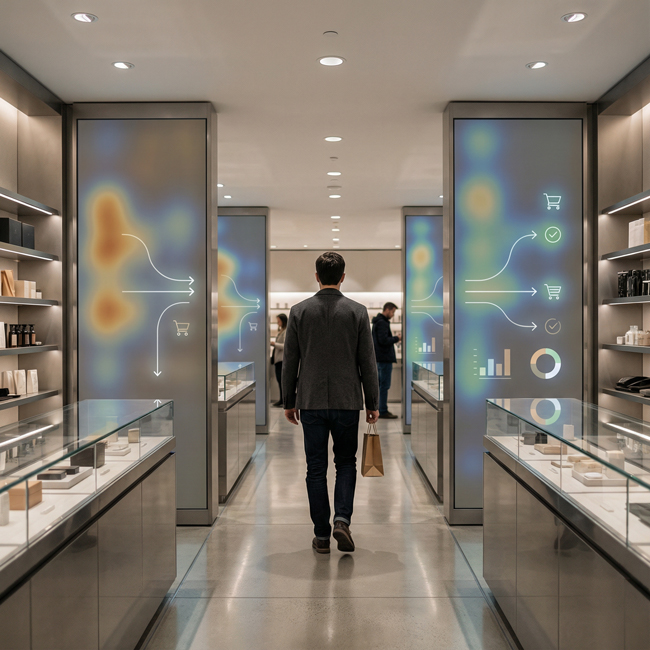
The store becomes a learning system, not a static space.
Here’s the reality:
simply adding screens does not guarantee results.
What actually drives sales is:
Overcomplicated systems confuse customers instead of converting them.
Do digital experience solutions increase sales?
Yes—but not because they are digital.
They work because they:
The most successful brands understand this clearly:
Products are not sold. Experiences are designed.